
The February Theory: A Case Study
Respect the dead, and move on.

The grocery store flowers have long decayed. The candy hearts have been dissolved in stomach acid for quite some time, and the teddy bears have become matted.
All symbols of yet another February passing. And yet, this month still seems to dig up the skeletons we have long tossed into the closet. For some of you, the theory may have proved to be true, while the more fortunate ones abstained from February’s cruelest experiment.
Dear reader, I speak of the February theory, which characterizes the month as a sort of liminal time in which one remembers a toxic ex’s grasp as soft rather than violating, their words as sweet as honey, rather than knives we may have characterized them as. This is because of a certain faux-nostalgia that adds a shimmering rosy tint to that toxic ex. It’s kind of funny how time has a way of blurring out the bad and makes someone rethink healthy choices.
Catching yourself repeating toxic relational patterns can feel like you’re diving into an Edward Hopper painting, quiet and painfully nostalgic. But outside of the painting, the world still moves, and is dedicated to convincing us that love should not only be celebrated but, more importantly, purchased this month. Of course, I come with receipts.

According to the National Retailers Federation, there was an approximate 6% increase in Valentine’s Day sales this year, which led to a record-breaking $29.1 billion in consumer spending. This means the average consumer spends about $200 on the holiday. (NRF, 2026)
Imagine how much of this money was spent on buying back an ill-fated love.
Hey now, I am not coming to you as the grim reaper of romance, but rather a harbinger of hope.
Your healing may have been fruitful all year, and you may have thought, “Maybe I deserve this—maybe I deserve a relationship.” But my dear, a relationship is not a reward for healing.
Self-work should never be done with the expectation that a partner will be waiting for you at the finish line. If you believed this, do not beat yourself up about it. This kind of belief does not simply appear out of thin air. Movies like 10 Things I Hate About You and Silver Linings Playbook mislead their viewers by making them feel as though once they hit that last step in personal growth, a freaking boyfriend is the prize, yuck. If you fell prey to the theory’s grasp, perhaps a new methodology is required—one that views alone time as solitude rather than isolation
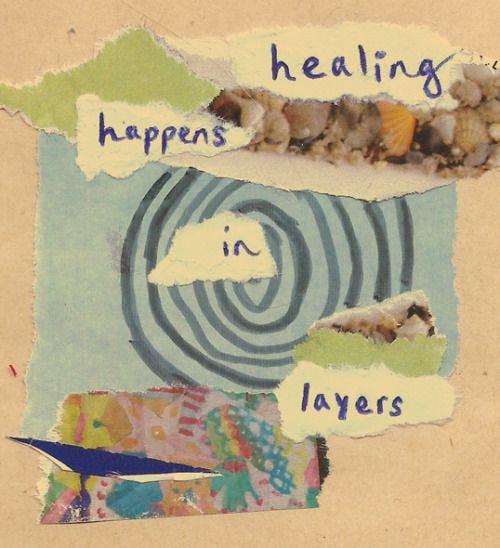
But let me make something very clear: healing is not linear. There will be setbacks, and yes—it fucking sucks. But a bad moment, a bad day, or even a bad week does not mean you have regressed in any way. We hear it all the time, but it remains true: it is okay to not be okay.
However, if your healing becomes contingent on external validation—like the promise of a relationship—I’m sorry to say it, but real growth will always remain out of reach.
To be completely transparent, I felt this way for the majority of my life. I believed that if I did the journaling, meditation, and self-care, the universe would reward me with my first relationship, or at least some karmic reparations.
But I have to come to a realization rooted in stoicism: the universe owes me absolutely nothing.
And honestly? This realization has set me free. Anything that I receive in this lifetime will be due to my hard work and not for having something as basic as self-respect.
February, you did not triumph over me this time.
And the best part is that I didn’t fight you anymore.
I let you run your course as if you were just another month, not the one I used to cling to.
Thank you so much, diva, for taking the time to give this a read or listen. Hopefully, you did not repeat old patterns, but if you did, please be kind and give yourself grace. Once again, reader, it has been an absolute pleasure having you here with me—now go drink some water, you dehydrated diva.💧✨
Amazing!! Love the references and parallels to art, movies and statistics🙌🏾